# 事务限制
## 1. 隔离级别
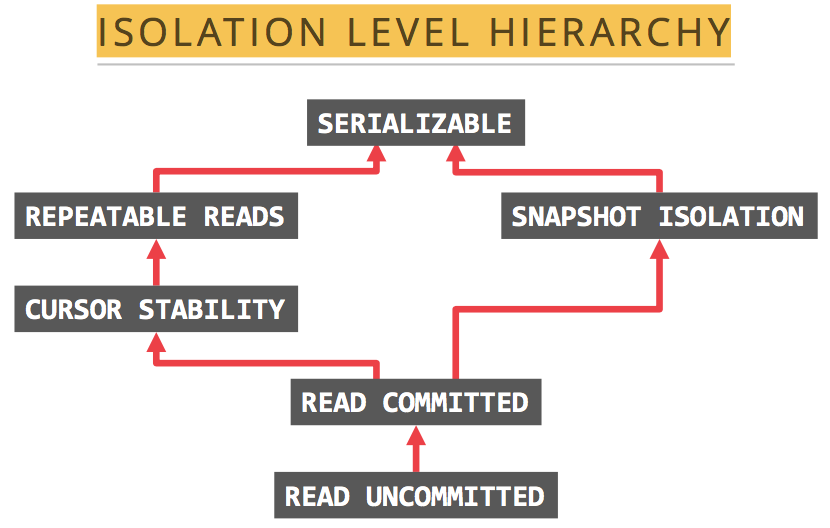
TiDB 支持的隔离级别是 RC(Read Committed)与 SI(Snapshot Isolation),其中 SI 与 RR(Repeatable Read)隔离级别基本等价。
## 2. SI 可以克服幻读
TiDB 的 SI 隔离级别可以克服幻读异常(Phantom Reads),但 ANSI/ISO SQL 标准 中的 RR 不能。
所谓幻读是指:事务 A 首先根据条件查询得到 n 条记录,然后事务 B 改变了这 n 条记录之外的 m 条记录或者增添了 m 条符合事务 A 查询条件的记录,导致事务 A 再次发起请求时发现有 n+m 条符合条件记录,就产生了幻读。
例如:系统管理员 A 将数据库中所有学生的成绩从具体分数改为 ABCDE 等级,但是系统管理员 B 就在这个时候插入了一条具体分数的记录,当系统管理员 A 改结束后发现还有一条记录没有改过来,就好像发生了幻觉一样,这就叫幻读。
## 3. SI 不能克服写偏斜
TiDB 的 SI 隔离级别不能克服写偏斜异常(Write Skew),需要使用 Select for update 语法来克服写偏斜异常。
写偏斜异常是指两个并发的事务读取了不同但相关的记录,接着这两个事务各自更新了自己读到的数据,并最终都提交了事务,如果这些相关的记录之间存在着不能被多个事务并发修改的约束,那么最终结果将是违反约束的。
想象一下这个例子:你正在为医院写一个医生轮班管理程序。医院通常会同时要求几位医生待命,但底线是至少有一位医生在待命。医生可以放弃他们的班次(例如,如果他们自己生病了),只要至少有一个同事在这一班中继续工作。
现在想象一下,Alice 和 Bob 是两位值班医生。两人都感到不适,所以他们都决定请假。不幸的是,他们恰好在同一时间点击按钮下班。下面我们用程序来模拟一下这个过程。
```java
package com.pingcap.txn.write.skew;
import com.zaxxer.hikari.HikariDataSource;
import java.sql.Connection;
import java.sql.PreparedStatement;
import java.sql.ResultSet;
import java.sql.SQLException;
import java.util.concurrent.CountDownLatch;
import java.util.concurrent.ExecutorService;
import java.util.concurrent.Executors;
import java.util.concurrent.Semaphore;
public class EffectWriteSkew {
public static void main(String[] args) throws SQLException, InterruptedException {
HikariDataSource ds = new HikariDataSource();
ds.setJdbcUrl("jdbc:mysql://localhost:4000/test?useServerPrepStmts=true&cachePrepStmts=true");
ds.setUsername("root");
// prepare data
Connection connection = ds.getConnection();
createDoctorTable(connection);
createDoctor(connection, 1, "Alice", true, 123);
createDoctor(connection, 2, "Bob", true, 123);
createDoctor(connection, 3, "Carol", false, 123);
Semaphore txn1Pass = new Semaphore(0);
CountDownLatch countDownLatch = new CountDownLatch(2);
ExecutorService threadPool = Executors.newFixedThreadPool(2);
threadPool.execute(() -> {
askForLeave(ds, txn1Pass, 1, 1);
countDownLatch.countDown();
});
threadPool.execute(() -> {
askForLeave(ds, txn1Pass, 2, 2);
countDownLatch.countDown();
});
countDownLatch.await();
}
public static void createDoctorTable(Connection connection) throws SQLException {
connection.createStatement().executeUpdate("CREATE TABLE `doctors` (" +
" `id` int(11) NOT NULL," +
" `name` varchar(255) DEFAULT NULL," +
" `on_call` tinyint(1) DEFAULT NULL," +
" `shift_id` int(11) DEFAULT NULL," +
" PRIMARY KEY (`id`)," +
" KEY `idx_shift_id` (`shift_id`)" +
" ) ENGINE=InnoDB DEFAULT CHARSET=utf8mb4 COLLATE=utf8mb4_bin");
}
public static void createDoctor(Connection connection, Integer id, String name, Boolean onCall, Integer shiftID) throws SQLException {
PreparedStatement insert = connection.prepareStatement(
"INSERT INTO `doctors` (`id`, `name`, `on_call`, `shift_id`) VALUES (?, ?, ?, ?)");
insert.setInt(1, id);
insert.setString(2, name);
insert.setBoolean(3, onCall);
insert.setInt(4, shiftID);
insert.executeUpdate();
}
public static void askForLeave(HikariDataSource ds, Semaphore txn1Pass, Integer txnID, Integer doctorID) {
try(Connection connection = ds.getConnection()) {
try {
connection.setAutoCommit(false);
String comment = txnID == 2 ? " " : "" + "/* txn #{txn_id} */ ";
connection.createStatement().executeUpdate(comment + "BEGIN");
// Txn 1 should be waiting for txn 2 done
if (txnID == 1) {
txn1Pass.acquire();
}
PreparedStatement currentOnCallQuery = connection.prepareStatement(comment +
"SELECT COUNT(*) AS `count` FROM `doctors` WHERE `on_call` = ? AND `shift_id` = ?");
currentOnCallQuery.setBoolean(1, true);
currentOnCallQuery.setInt(2, 123);
ResultSet res = currentOnCallQuery.executeQuery();
if (!res.next()) {
throw new RuntimeException("error query");
} else {
int count = res.getInt("count");
if (count >= 2) {
// If current on-call doctor has 2 or more, this doctor can leave
PreparedStatement insert = connection.prepareStatement( comment +
"UPDATE `doctors` SET `on_call` = ? WHERE `id` = ? AND `shift_id` = ?");
insert.setBoolean(1, false);
insert.setInt(2, doctorID);
insert.setInt(3, 123);
insert.executeUpdate();
connection.commit();
} else {
throw new RuntimeException("At least one doctor is on call");
}
}
// Txn 2 done, let txn 1 run again
if (txnID == 2) {
txn1Pass.release();
}
} catch (Exception e) {
// If got any error, you should roll back, data is priceless
connection.rollback();
e.printStackTrace();
}
} catch (SQLException e) {
e.printStackTrace();
}
}
}
```
SQL 日志:
```sql
/* txn 1 */ begin
/* txn 2 */ begin
/* txn 2 */ select count(*) as count from doctors where on_call = 1 and shift_id = 123
/* txn 2 */ update doctors set on_call = 0 where id = 2 and shift_id = 123
/* txn 2 */ commit
/* txn 1 */ select count(*) as count from doctors where on_call = 1 and shift_id = 123
/* txn 1 */ update doctors set on_call = 0 where id = 1 and shift_id = 123
/* txn 1 */ commit
```
执行结果:
```sql
mysql> select * from doctors;
+----+-------+---------+----------+
| id | name | on_call | shift_id |
+----+-------+---------+----------+
| 1 | Alice | 0 | 123 |
| 2 | Bob | 0 | 123 |
| 3 | Carol | 0 | 123 |
+----+-------+---------+----------+
```
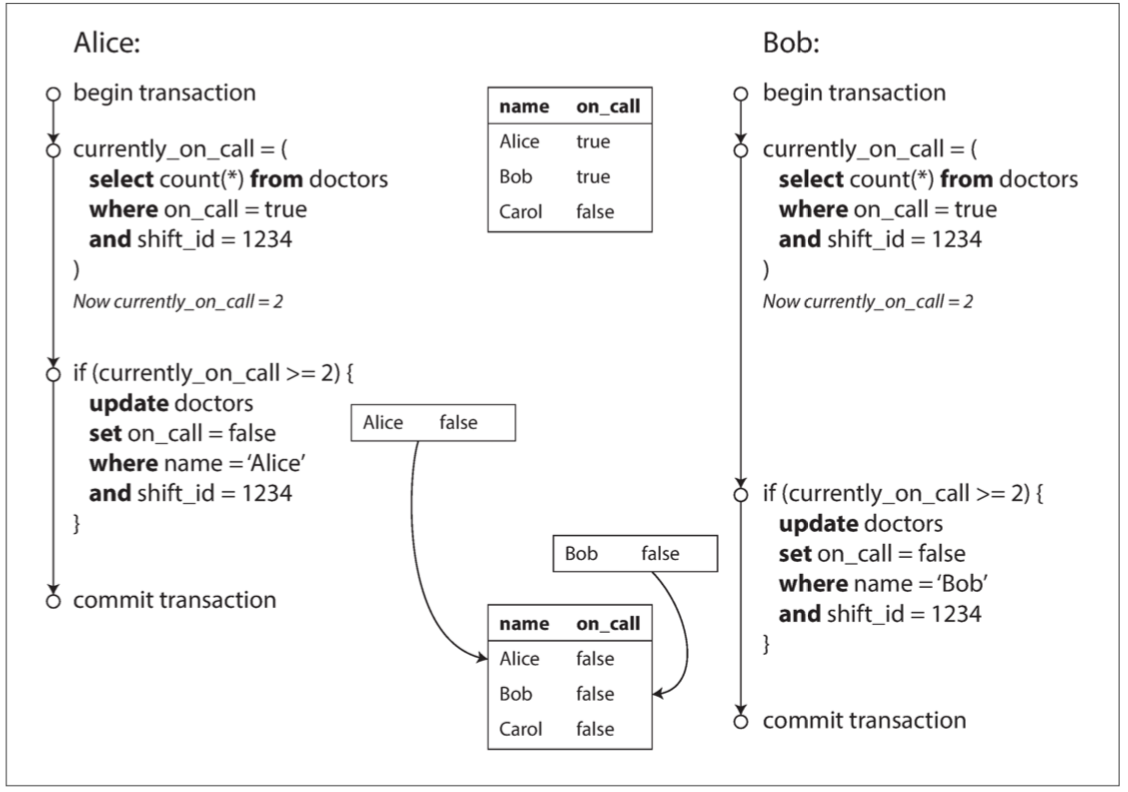
在两个事务中,应用首先检查是否有两个或以上的医生正在值班;如果是的话,它就假定一名医生可以安全地休班。由于数据库使用快照隔离,两次检查都返回 2 ,所以两个事务都进入下一个阶段。Alice 更新自己的记录休班了,而 Bob 也做了一样的事情。两个事务都成功提交了,现在没有医生值班了。违反了至少有一名医生在值班的要求。下图(引用自《Designing Data-Intensive Application》)说明了实际发生的情况:
现在我们来更改示例程序,使用 `select for update` 来克服写偏斜问题:
```java
package com.pingcap.txn.write.skew;
import com.zaxxer.hikari.HikariDataSource;
import java.sql.Connection;
import java.sql.PreparedStatement;
import java.sql.ResultSet;
import java.sql.SQLException;
import java.util.concurrent.CountDownLatch;
import java.util.concurrent.ExecutorService;
import java.util.concurrent.Executors;
import java.util.concurrent.Semaphore;
public class EffectWriteSkew {
public static void main(String[] args) throws SQLException, InterruptedException {
HikariDataSource ds = new HikariDataSource();
ds.setJdbcUrl("jdbc:mysql://localhost:4000/test?useServerPrepStmts=true&cachePrepStmts=true");
ds.setUsername("root");
// prepare data
Connection connection = ds.getConnection();
createDoctorTable(connection);
createDoctor(connection, 1, "Alice", true, 123);
createDoctor(connection, 2, "Bob", true, 123);
createDoctor(connection, 3, "Carol", false, 123);
Semaphore txn1Pass = new Semaphore(0);
CountDownLatch countDownLatch = new CountDownLatch(2);
ExecutorService threadPool = Executors.newFixedThreadPool(2);
threadPool.execute(() -> {
askForLeave(ds, txn1Pass, 1, 1);
countDownLatch.countDown();
});
threadPool.execute(() -> {
askForLeave(ds, txn1Pass, 2, 2);
countDownLatch.countDown();
});
countDownLatch.await();
}
public static void createDoctorTable(Connection connection) throws SQLException {
connection.createStatement().executeUpdate("CREATE TABLE `doctors` (" +
" `id` int(11) NOT NULL," +
" `name` varchar(255) DEFAULT NULL," +
" `on_call` tinyint(1) DEFAULT NULL," +
" `shift_id` int(11) DEFAULT NULL," +
" PRIMARY KEY (`id`)," +
" KEY `idx_shift_id` (`shift_id`)" +
" ) ENGINE=InnoDB DEFAULT CHARSET=utf8mb4 COLLATE=utf8mb4_bin");
}
public static void createDoctor(Connection connection, Integer id, String name, Boolean onCall, Integer shiftID) throws SQLException {
PreparedStatement insert = connection.prepareStatement(
"INSERT INTO `doctors` (`id`, `name`, `on_call`, `shift_id`) VALUES (?, ?, ?, ?)");
insert.setInt(1, id);
insert.setString(2, name);
insert.setBoolean(3, onCall);
insert.setInt(4, shiftID);
insert.executeUpdate();
}
public static void askForLeave(HikariDataSource ds, Semaphore txn1Pass, Integer txnID, Integer doctorID) {
try(Connection connection = ds.getConnection()) {
try {
connection.setAutoCommit(false);
String comment = txnID == 2 ? " " : "" + "/* txn #{txn_id} */ ";
connection.createStatement().executeUpdate(comment + "BEGIN");
// Txn 1 should be waiting for txn 2 done
if (txnID == 1) {
txn1Pass.acquire();
}
PreparedStatement currentOnCallQuery = connection.prepareStatement(comment +
"SELECT COUNT(*) AS `count` FROM `doctors` WHERE `on_call` = ? AND `shift_id` = ? FOR UPDATE");
currentOnCallQuery.setBoolean(1, true);
currentOnCallQuery.setInt(2, 123);
ResultSet res = currentOnCallQuery.executeQuery();
if (!res.next()) {
throw new RuntimeException("error query");
} else {
int count = res.getInt("count");
if (count >= 2) {
// If current on-call doctor has 2 or more, this doctor can leave
PreparedStatement insert = connection.prepareStatement( comment +
"UPDATE `doctors` SET `on_call` = ? WHERE `id` = ? AND `shift_id` = ?");
insert.setBoolean(1, false);
insert.setInt(2, doctorID);
insert.setInt(3, 123);
insert.executeUpdate();
connection.commit();
} else {
throw new RuntimeException("At least one doctor is on call");
}
}
// Txn 2 done, let txn 1 run again
if (txnID == 2) {
txn1Pass.release();
}
} catch (Exception e) {
// If got any error, you should roll back, data is priceless
connection.rollback();
e.printStackTrace();
}
} catch (SQLException e) {
e.printStackTrace();
}
}
}
```
SQL 日志:
```sql
/* txn 1 */ begin
/* txn 2 */ begin
/* txn 2 */ select count(*) as count from doctors where on_call = 1 and shift_id = 123 for update
/* txn 2 */ update doctors set on_call = 0 where id = 2 and shift_id = 123
/* txn 2 */ commit
/* txn 1 */ select count(*) as count from doctors where on_call = 1 for update
At least one doctor is on call
/* txn 1 */ rollback
```
执行结果:
```sql
mysql> select * from doctors;
+----+-------+---------+----------+
| id | name | on_call | shift_id |
+----+-------+---------+----------+
| 1 | Alice | 1 | 123 |
| 2 | Bob | 0 | 123 |
| 3 | Carol | 0 | 123 |
+----+-------+---------+----------+
```
## 4. 不支持 savepoint 和嵌套事务
Spring 支持的 PROPAGATION_NESTED 传播行为会启动一个嵌套的事务,它是当前事务之上独立启动的一个子事务。嵌套事务开始时会记录一个
savepoint ,如果嵌套事务执行失败,事务将会回滚到 savepoint 的状态。嵌套事务是外层事务的一部分,它将会在外层事务提交时一起被提交。下面案例展示了
savepoint 机制:
```sql
mysql> BEGIN;
mysql> INSERT INTO T2 VALUES(100);
mysql> SAVEPOINT svp1;
mysql> INSERT INTO T2 VALUES(200);
mysql> ROLLBACK TO SAVEPOINT svp1;
mysql> RELEASE SAVEPOINT svp1;
mysql> COMMIT;
mysql> SELECT * FROM T2;
+------+
| ID |
+------+
| 100 |
+------+
```
TiDB 不支持 savepoint 机制,因此也不支持 PROPAGATION_NESTED 传播行为。基于 Java Spring 框架的应用如果使用了 PROPAGATION_NESTED 传播行为,需要在应用端做出调整,将嵌套事务的逻辑移除。
## 5. 大事务限制
基本原则是要限制事务的大小。TiDB 对单个事务的大小有限制,这层限制是在 KV 层面。反映在 SQL 层面的话,简单来说一行数据会映射为一个 KV entry,每多一个索引,也会增加一个 KV entry。所以这个限制反映在 SQL 层面是:
- 最大单行记录容量为 120MB(TiDB v5.0 及更高的版本可通过 tidb-server 配置项 `performance.txn-entry-size-limit` 调整,低于 TiDB v5.0 的版本支持的单行容量为 6MB)
- 支持的最大单个事务容量为 10GB(TiDB v4.0 及更高版本可通过 tidb-server 配置项 `performance.txn-total-size-limit` 调整,低于 TiDB v4.0
的版本支持的最大单个事务容量为 100MB)
另外注意,无论是大小限制还是行数限制,还要考虑事务执行过程中,TiDB 做编码以及事务额外 Key 的开销。在使用的时候,为了使性能达到最优,建议每 100~500 行写入一个事务。
## 6. 自动提交的 SELECT FOR UPDATE 语句不会等锁
自动提交下的 select for update 目前不会加锁。效果如下图所示:
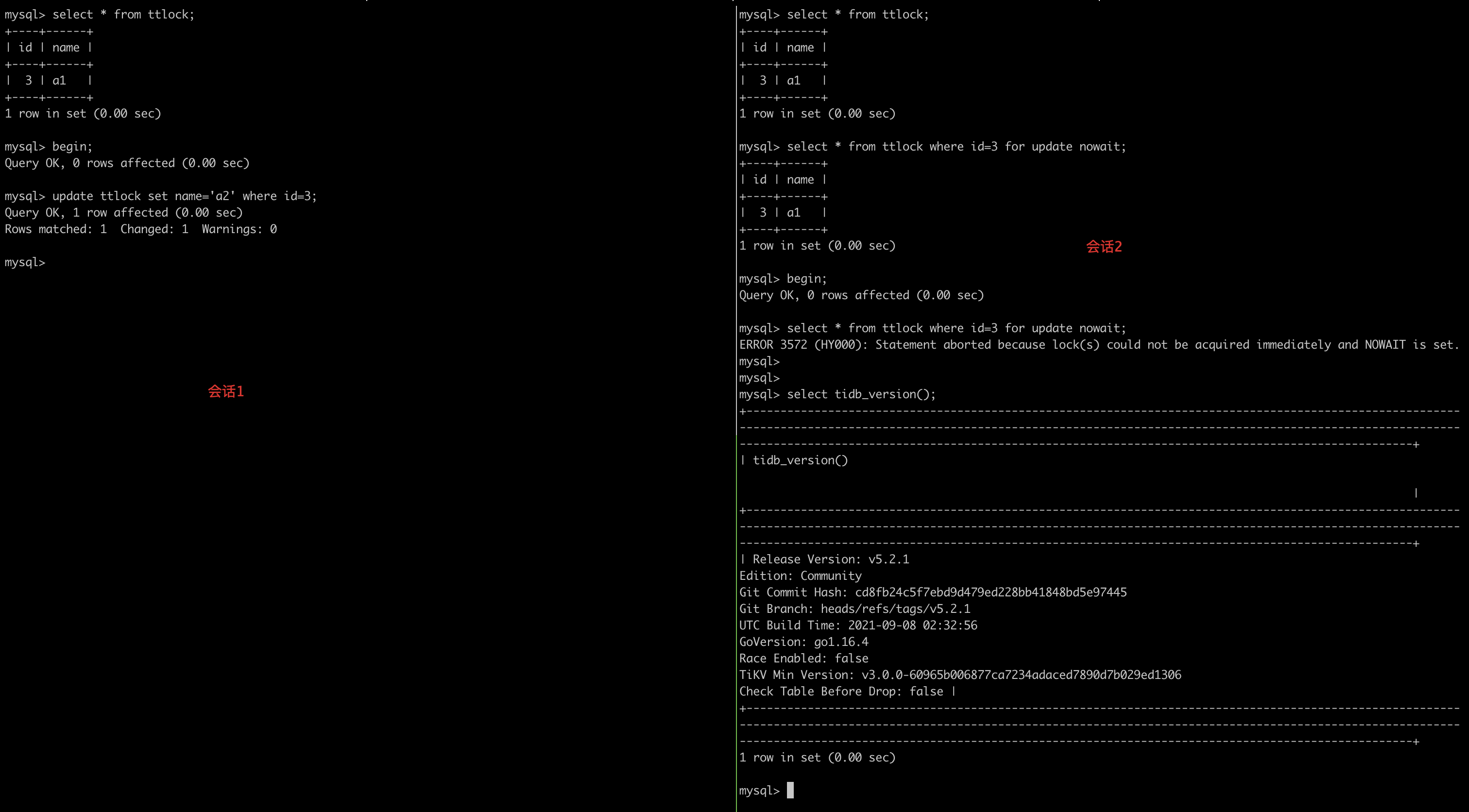
这是已知的与 MySQL 不兼容的地方。
可以通过使用显式的 `begin;commit;` 解决该问题。